Executive Summary
Gear oil lubricates the gears inside a vehicle’s differential, reducing friction and wear while carrying heat away. Its additives protect the curved, sliding teeth of hypoid gears under heavy pressure. This protection lets the differential keep both wheels turning at the right speeds through corners. Without fresh gear oil of the correct type, the gears wear faster, run hotter, and can eventually fail.
Every time you steer around a corner, the outer wheel moves farther than the inner wheel. The differential lets the drive wheels spin at different speeds to cover that gap. Its gears work hard every mile, yet most drivers never think about the oil that protects them. Neglecting differential maintenance can lead to excessive wear and costly repairs.
In the sections below, we explain what gear oil does inside the differential, why the job is tougher than it looks, and what changes when the oil ages, so you can make smarter decisions about the drivetrain you rely on every day.
How the Differential Works in Your Drivetrain
SlashGear says a differential is a set of gears that lets the inner and outer wheels turn at different speeds. Without that freedom, the wheels would fight each other in a turn, causing slipping and making it hard to maintain control. Where you find the differential depends on the drivetrain.
Front-wheel-drive cars usually combine it with the transmission in a transaxle, rear-wheel-drive vehicles carry it at the back, and all-wheel-drive and four-wheel-drive vehicles have more than one. Those gears need constant lubrication. Without it, the differential wears out faster, and your handling suffers.
The Core Gear Oil Function Inside the Housing
Gear oil is a heavy lubricant formulated for gear sets, some of the hardest-working parts in your vehicle. It sits in the differential housing and coats every moving surface as the gears turn. Gear oil performs three main functions:
- It reduces friction by keeping a film between meshing teeth, so metal does not rub directly on metal.
- It limits wear under pressure with additives that protect the gear faces under high loads.
- It carries heat away, keeping gears and bearings within a safe operating range.
Together, these jobs keep the ring and pinion gears, the side gears, and the bearings turning smoothly. When the oil is in good condition, the differential can operate as designed. Inadequate lubrication can cause wear, noise, and damage.
Gear Oil Duties and What Goes Wrong Without Them
It helps to see each job next to its consequence. The table below shows how the oil protects the differential and what you risk when it falls short.
Differential Gear Protection Under Pressure
Differential gears face tougher contact than many gears in your vehicle, so ordinary lubrication is not enough. The oil must protect gear surfaces that experience substantial sliding contact under high loads. Here is how that works.
Why Hypoid Gears Need Extra Help
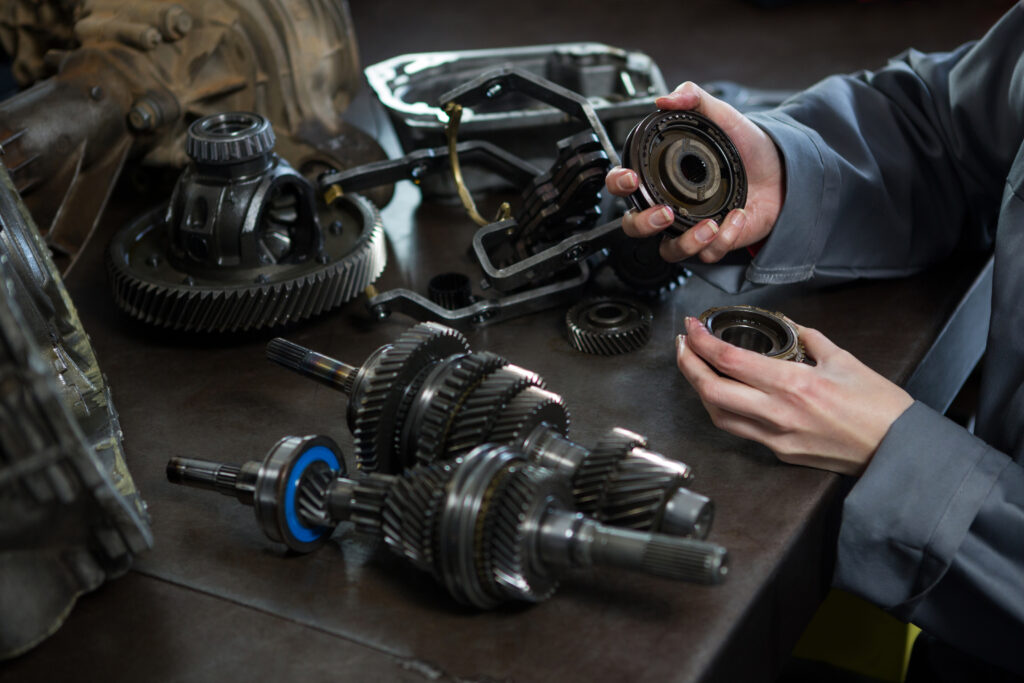
According to Hagerty Media, differentials usually have hypoid gears with curved, sliding tooth surfaces, and those surfaces need extreme-pressure additives to reduce wear. In plain terms, the teeth do not just roll against each other. They also slide, and that sliding raises the demand on the oil film. Additives help the oil keep protecting the teeth under high pressure.
How Additives and Ratings Fit In
Gear oils carry performance ratings that tell you how much of that protection they offer. Knowing the basics helps you read a label with confidence.
● GL-4 and GL-5 at a Glance
Hagerty explains that GL-4 oils contain about half the extreme-pressure additives found in GL-5 oils. Some GL-4 products still say on the label that they suit hypoid differentials, so always match the label to your owner’s manual.
● Why the Wrong Oil Can Cause Damage
The additives that protect hypoid gears contain sulfur and phosphorus compounds that can attack brass, bronze, and copper. Manual transmission synchronizers use brass, which is why differentials and transmissions typically take different oils. Using the wrong product in the wrong area can harm the very parts you want to protect.
Gear Oil Load Protection for Towing and Heavy Use
Load is the stress your driving puts on the gears. Towing, hauling, off-roading, and spirited driving all increase it, and the oil must maintain its protective film as the gears push harder. Many everyday cars see light loads, but trucks and SUVs that tow or haul put much more stress on the differential.
That is why many technicians suggest checking the oil earlier on vehicles used this way. Towing can increase gear loads and operating temperatures, placing greater demands on the lubricant, so heavier use calls for closer attention to the oil’s condition.
What Happens When a Differential Lubricant Gets Old
According to SlashGear, differential oil is one of the most neglected fluids in a vehicle because skipping it has fewer immediate effects than skipping engine oil or coolant. Many rear-drive owners’ manuals barely mention it, and some vehicles use a so-called lifetime fluid. Towing, off-roading, and hard driving put more stress on that oil than the design intended, so those vehicles need earlier checks.
Moisture, mud, and road salt can contaminate and break down differential oil, which leaves the gears less protected. As the oil ages, friction and heat rise, and the gears wear faster. SlashGear also notes that Toyota mechanics see the first 30,000 miles as an early checkpoint because new gears shed metal shavings while they break in.
Choosing Automotive Gear Oil in Texas
Texas driving puts extra demands on differential oil, especially in these conditions:
- Long, hot summers that raise the oil temperature
- Highway miles that keep the gears working for hours
- Towing and hauling that increase the load on the differential
- Flooded roads after storms that can let water into the housing
Start with your owner’s manual for the viscosity and rating your vehicle requires, because the wrong type can damage the gears. Some manufacturers also recommend fluid service after driving through floodwater, so check your manual if that happens. Ask your technician to check the oil level and condition at routine visits, and schedule an inspection sooner if you tow, haul heavy loads, or drive through standing water.
Healthy gears work best alongside a healthy fuel system. Drivers searching for gasoline injector cleaner, TX, can turn to AMSOIL for fuel care products that keep the rest of the vehicle in good shape.
Frequently Asked Questions
1. What does gear oil do in a differential?
Gear oil reduces friction between the differential’s gears and bearings, so metal doesn’t grind against metal. It also carries heat away and uses special additives to protect gear teeth under heavy pressure, keeping the wheels turning smoothly at different speeds in corners.
2. Why does a differential need gear oil?
The differential contains gears that mesh and slide under heavy force every time the vehicle moves. Without gear oil, those parts would rub together, overheat, and wear out. Gear oil maintains a protective film so the differential can keep doing its job during turns.
3. How does gear oil protect differential gears?
Gear oil forms a film between the gear teeth, and extreme-pressure additives protect the curved, sliding surfaces of hypoid gears. This reduces friction, wear, and heat, so the gears last longer under normal driving and under heavy loads.
4. What happens when differential oil gets old?
Old oil protects less, and moisture, mud, or road salt can break it down further. The gears then face more friction and heat, which can lead to wear, noise, and eventual damage to the differential, along with poorer handling.
5. How do I know which gear oil my differential needs?
Check your owner’s manual for the required viscosity and performance rating. Differentials typically use different oils than transmissions because their gears differ, so don’t assume one product fits both.
Final Thoughts
Gear oil protects the differential by reducing friction, helping manage heat, and limiting wear on heavily loaded gear teeth. The right lubricant depends on the vehicle’s design and the manufacturer’s specifications. Follow the recommended service schedule, pay attention to towing and water exposure, and investigate leaks or unusual drivetrain noises promptly.
Differential lubricant protects the gears, while engine oil lubricates the engine. AMSOIL supplies genuine synthetics for drivers searching online in TX for 5W-20 synthetic oil, along with clear guidance on which product suits their engine.