
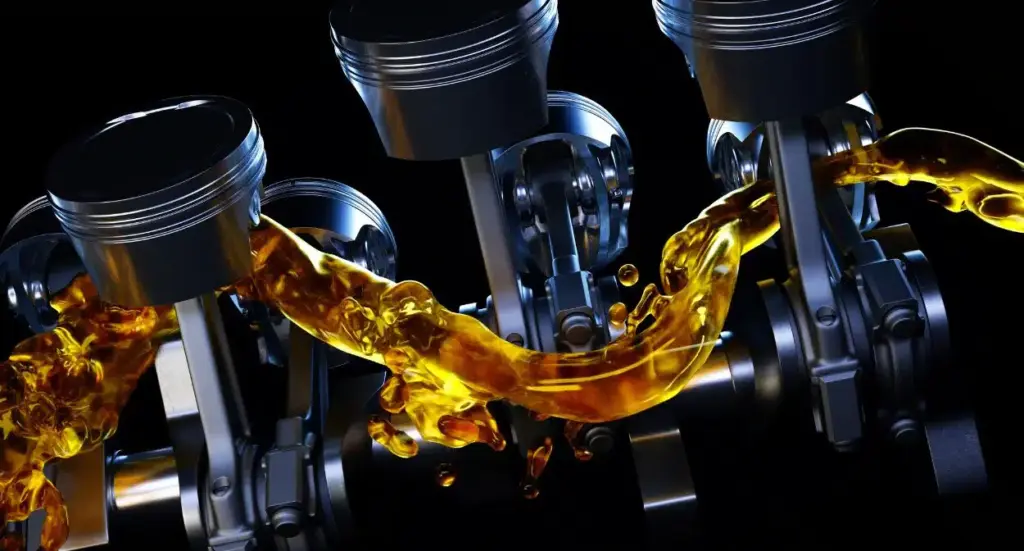
Modern engines are built differently than they were even fifteen years ago. They run hotter, operate under greater pressure, and are expected to last longer with fewer mechanical issues. Turbocharged systems, direct injection technology, variable valve timing, and stop-start functionality have completely transformed what’s happening under the hood.
All of that progress is impressive. But it comes with a real consequence that many drivers overlook: today’s engines are far more demanding on the oil that protects them.
The wrong lubrication doesn’t just reduce performance. It accelerates wear, increases the risk of costly repairs, and shortens the life of an engine that was built to go the distance. If you want your vehicle to live up to its potential, understanding why advanced engine lubrication matters is a great place to start.
What Is Fully Synthetic Motor Oil?
Before diving into why modern engines need it, let’s clarify what we’re actually talking about. It’s a lubricant that’s chemically engineered rather than refined directly from crude oil.
Conventional motor oil starts as petroleum extracted from the ground and then undergoes a purification process. It does the job under basic conditions, but it still exhibits molecular inconsistencies that affect its performance under stress. Fully synthetic oil takes a different approach entirely. Scientists engineer it at the molecular level, creating a product that is uniform, stable, and precisely designed for high-demand applications.
That level of consistency matters enormously in a modern engine. Today’s engines are machined with incredibly tight tolerances. The oil film separating moving components is razor thin, and any inconsistency in lubrication quality shows up quickly as increased friction and accelerated wear. Fully synthetic motor oil is built to meet that standard reliably, every time.
What Types of Engines Require Synthetic Oil?
More vehicles than most drivers expect. The list has grown significantly as engine technology has advanced. Here’s a look at the engines that benefit most:
- Turbocharged engines subject oil to intense heat around the turbo bearing. Conventional oil breaks down at those temperatures, leaving behind harmful deposits that restrict oil flow and damage the turbocharger over time.
- High-performance engines operate at elevated RPMs and temperatures, demanding a lubricant that withstands sustained stress without thinning or losing its protective properties.
- European-spec engines are almost universally designed for synthetic oil, with tighter internal clearances that conventional oil cannot adequately support.
- Direct injection engines are especially prone to carbon buildup on intake valves. High-quality synthetic oil helps minimize deposit formation and keeps those components cleaner over time.
- Stop-start vehicles cycle the engine on and off repeatedly throughout every drive. The oil needs to deliver near-instant protection each time the engine restarts, which is exactly where synthetic oil excels.
If your vehicle was manufactured in the last decade, your owner’s manual likely already specifies synthetic oil. It’s worth confirming before your next oil change.
How Advanced Lubrication Protects the Modern Engine?
Advanced lubrication doesn’t just reduce friction. It protects your engine across multiple fronts at once. Here’s a closer look at what’s happening inside your engine and how the right oil makes a difference in each area.
1. Cold Start Protection
The most vulnerable moment for any engine is the first few seconds after startup. Oil has to circulate before it can protect, and in cold conditions, thicker conventional oil takes longer to reach critical components. Those few unprotected seconds are when a significant portion of engine wear actually occurs.
Synthetic oil flows much faster at low temperatures. It reaches bearings, cylinder walls, and valve trains almost immediately after the engine turns over, cutting down that unprotected window and reducing wear right from the start.
2. High-Temperature Stability
Modern turbocharged and direct-injection engines generate serious heat during operation. Conventional oil struggles to maintain its viscosity at sustained high temperatures, causing the protective film between engine components to break down sooner than it should.
Synthetic oil holds its properties under heat far more effectively. It keeps the protective film intact even when the engine is working at full capacity, providing consistent coverage when the stakes are highest.
3. Engine Wear Protection
Itis the core responsibility of any motor oil. Every time metal surfaces move against each other, there is potential for microscopic damage that accumulates over thousands of miles. Advanced synthetic lubricants form a stronger, more durable film between surfaces, dramatically lowering wear rates and extending the usable life of critical components such as bearings, camshafts, and pistons.
4. Sludge and Deposit Prevention
Sludge is one of the most damaging things that can build up inside an engine. It forms when oil oxidizes and degrades, leaving behind thick deposits that clog oil passages, coat engine surfaces, and reduce overall efficiency.
Synthetic oil resists oxidation far better than conventional oil. It remains chemically stable longer, which means it keeps the engine’s internals cleaner for many more miles.
5. Seal and Gasket Compatibility
Modern engines use seals and gaskets that are specifically engineered to work with synthetic lubricants. Running lower-quality oil through these engines can cause seals to harden, shrink, or degrade faster than they should, which leads to leaks and expensive repairs down the line.
Quality synthetic oil actively conditions seals, helping them maintain their flexibility and integrity over the long term.
6. Extended Service Life
Synthetic oil simply lasts longer between changes. It resists breakdown far better than conventional oil and retains its protective properties for many more miles. Fewer oil changes mean less maintenance downtime and more consistent engine protection between services.
Does Synthetic Oil Improve Fuel Economy?
Synthetic oil reduces internal friction more effectively than conventional oil, especially during cold starts and at lower operating temperatures. When the engine doesn’t have to work as hard to circulate oil through its passages, some of that saved energy converts directly into better fuel efficiency.
The improvement is measured rather than dramatic. Most drivers see a modest percentage gain, which might not turn heads on a single fill-up. But over a full year of regular driving, those small gains add up to a number worth noticing. When you pair that with fewer oil changes and stronger long-term engine protection, the overall value of synthetic oil becomes very clear.
Why API-Certified Engine Oil Is Non-Negotiable
Walk into any auto parts store, and you’ll find dozens of oils claiming to be high-performance. Not all of them back that claim up with proof. This is exactly why certification matters.
API-certified engine oil has been independently tested and verified to meet the performance standards set by the American Petroleum Institute, one of the most trusted standards organizations in the automotive industry. When an oil earns that certification, it has passed rigorous benchmarks covering:
- Wear protection performance under high-load, high-stress conditions
- Resistance to sludge and deposit formation over extended drain intervals
- Compatibility with modern engine seals, components, and emission systems
- Fuel economy contribution across a range of driving temperatures and conditions
That API certification mark on the bottle is not just a logo. It is proof that the oil has been tested, validated, and qualified to do the job it promises. For modern engines operating under tight tolerances and demanding performance expectations, using non-certified oil poses real risks with real consequences.
How Often Should Synthetic Oil Be Changed?
The answer is more flexible than many expect, and that flexibility is one of the practical advantages of going synthetic. Most full synthetic oils perform reliably for 7,500 to 15,000 miles under normal driving conditions. Premium formulations can extend that window even further. However, your actual change interval should always account for your specific driving habits and environment. A few factors that can shorten the effective life of any oil include:
- Frequent short trips where the engine never fully warms up
- Extreme cold or hot climate conditions throughout the year
- Regular towing or hauling heavy loads that increase thermal stress
- Dusty or contaminated environments that accelerate oil degradation
Many modern vehicles come equipped with an oil life monitoring system that tracks these variables in real time and gives you a personalized change recommendation. Combining that system with your manufacturer’s guidelines takes the guesswork out of oil maintenance entirely.
Conclusion
Modern engines are precision-built machines, and they deserve lubrication that matches that precision. Advanced synthetic motor oil delivers the cold-start protection, thermal stability, deposit resistance, and long-term wear protection that today’s engines are specifically designed to rely on.
The cost of high-quality synthetic oil is minor compared to the cost of engine repairs. Protecting your engine properly from the start is always the smarter, more economical choice in the long run. Your engine was engineered to perform. Give it the lubrication that lets it do exactly that.
AMSOIL has everything your engine needs to perform at its best. Order the OE 100% synthetic motor oil online from us today!