
AMSOIL Diesel Oil Comparison Chart
This AMSOIL diesel oil comparison starts with matching viscosity and performance claims to your engine, your duty cycle and the engine maker’s requirement. This comparison covers AMSOIL Heavy-Duty 10W-30, Heavy-Duty 15W-40, Max-Duty 5W-40 and Signature Series Max-Duty, explains what actually differs between them, and shows what to verify before you buy. No single grade is best for every engine — the manual decides.
AMSOIL diesel oil comparison at a glance
Typical applications and the differences that matter. Confirm every line against the current data sheet and your manual before ordering.
| Product | Grade | Typically specified for | What to note |
|---|---|---|---|
| Heavy-Duty 10W-30 | 10W-30 | Newer on-road trucks, turbodiesel pickups and smaller off-road equipment | Better cold-start flow than 15W-40 while still protecting under load |
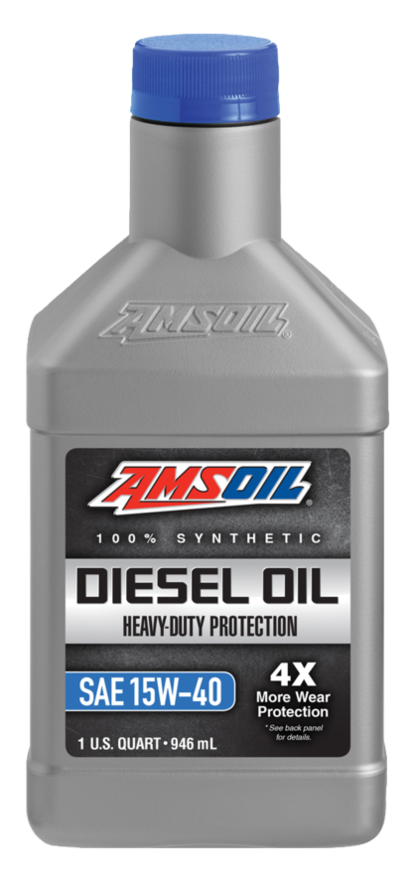
| Heavy-Duty 15W-40 | 15W-40 | Long-haul trucks, construction equipment and many older on-road engines | Balanced film strength and shear stability for high-temperature work |
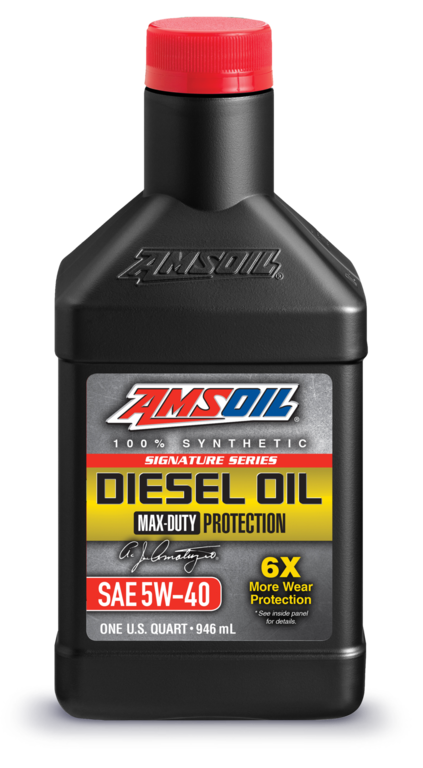
| Max-Duty 5W-40 | 5W-40 | Severe cold climates where the OEM approves 5W-40 | Improved cold-start circulation without giving up hot protection where specified |
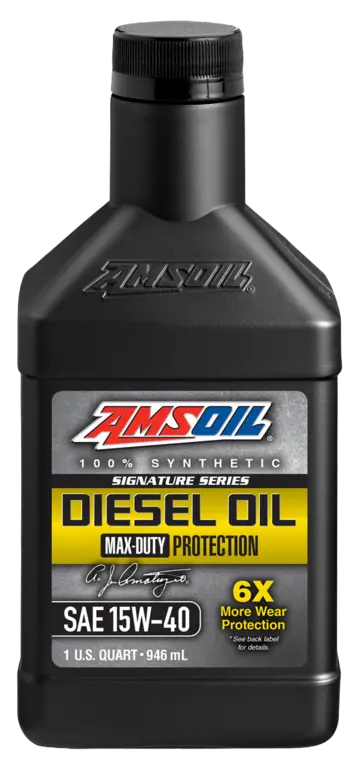
| Signature Series Max-Duty | 15W-40 | Operators wanting extended protection and deposit control | Top-tier formulation; extended drains still depend on OEM approval |
Approvals and limits differ between viscosities and product lines. A blanket “best oil” recommendation is not a specification.
AMSOIL diesel oils in this comparison
Available through SynOil4Sale in Pasadena. Ask about grades not shown here — the range is wider than this shortlist.
What to compare between these oils
Four attributes separate a good decision from a marketing one.
Viscosity at both ends
The W number governs cold starts, the second number governs hot film strength. Both have to suit your climate and the manual’s permitted range.
API and OEM approvals
Check the ratings and approvals on the data sheet for the exact viscosity you are buying. Approvals can differ between product lines.
HTHS and shear stability
High-temperature high-shear viscosity shows how well the oil holds film under severe load, which matters for towing and sustained grades.
Drain interval support
Extended drains depend on the engine, the duty cycle and OEM permission — not on the oil alone. Oil analysis is how you prove it.
Practical selection steps
In order, from the manual to the order.
Read the manual
Note the permitted viscosity range, the API or ACEA category required, and any OEM-specific approval.
Pick the matching products
Identify the AMSOIL product and viscosity that list those requirements. Two lines may both be “15W-40” and still differ in approvals.
Read the current data sheet
Confirm listed approvals, test results and recommended applications for the exact product and grade you intend to buy.
Check the equipment maker’s restrictions on drain intervals and additive use before extending a service schedule, and never switch grades purely for marketing claims.

Typical use cases and selection guidance
- Manual lists 15W-40 — choose Heavy-Duty 15W-40 unless the OEM permits another grade. This covers most long-haul and construction applications.
- Manual lists 10W-30 — use Heavy-Duty 10W-30 where specified, typically newer on-road trucks and turbodiesel pickups.
- Genuine cold climate — where the OEM allows 5W-40, Max-Duty 5W-40 improves cold-start circulation without sacrificing hot protection.
- Maximum protection and extended drains — Signature Series Max-Duty, subject to approvals and to oil analysis that supports the interval.
A lighter grade chosen for winter that the manual does not permit is a warranty risk, not an upgrade.
Common mistakes we see
- Dropping to a lighter grade for winter without confirming the OEM approves it. Cold-start flow is not worth a warranty dispute.
- Assuming one AMSOIL line replaces another across all engines. Approvals and intended uses differ by formulation and viscosity.
- Adopting an extended drain from a forum or a product page without checking that it applies to your engine and duty cycle.
- Mixing grades long-term as a habit rather than topping up during a changeover.
Each of these is cheap to avoid and expensive to discover on a used-oil report.

How this AMSOIL diesel oil comparison was researched
SynOil4Sale is an independent AMSOIL dealer in Pasadena, Texas, supplying diesel oils to owner-operators, small fleets and truck owners around Houston. The comparisons here reflect the questions those customers bring: whether a 10W-30 is acceptable in a truck that tows, or whether a 5W-40 makes sense in a climate that rarely freezes.
Viscosity ranges and product positioning were checked against current AMSOIL diesel oil data bulletins in October 2026. Approvals and drain limits must be confirmed per engine, so we point customers to the data sheet and their own manual rather than issuing blanket recommendations.
Generic charts age badly. If a figure here conflicts with the current AMSOIL bulletin or your engine maker’s documentation, those documents win.
AMSOIL diesel oil comparison questions
What owner-operators ask before switching grades.
Is 15W-40 always the best choice for a heavy-duty diesel?
Can I switch from conventional oil to AMSOIL synthetic?
How do I confirm the right product for my engine?
Compare Two Grades for Your Truck?
Tell us the engine, the model year and what the truck does — towing, highway miles or stop-and-go. We will confirm which AMSOIL diesel oil lists the approvals your engine needs.
SynOil4Sale is an independent AMSOIL dealer in Pasadena, TX. Confirm viscosity, approvals and drain intervals against your owner’s manual and the current AMSOIL data bulletin.